

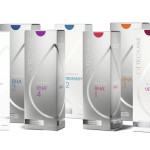
Teosyal, developed by Teoxane Laboratories in Geneva, is one of the most widely used hyaluronic acid filler ranges in aesthetic medicine — built specifically around the idea that a filler should move with the face rather than resist it. For clinics evaluating or expanding their filler portfolio, understanding how the range is structured makes it far easier to match the right product to the right indication, and to source it with confidence.
This guide breaks down the full Teosyal range, what each product is designed for, and what clinics should look for when sourcing it.
A Brief Background
Teoxane was founded in 2003 by biochemist Valerie Taupin with a singular focus on hyaluronic acid research. That focus led to two major product families that now anchor the Teosyal catalogue: the original PureSense Collection, and the more recent RHA Collection — built around Resilient Hyaluronic Acid, a crosslinking approach designed to preserve gel integrity under the constant stretch and movement of facial tissue.
The RHA Collection: Built for Dynamic Areas
The RHA range is formulated to hold its structure through repeated facial movement — talking, smiling, chewing — which makes it a common first choice for areas that rarely stay still.
RHA 1 — Fine, superficial lines and early signs of aging where subtlety matters most.
RHA 2 — Moderate dynamic wrinkles, including early nasolabial folds and perioral lines.
RHA 3 — Deeper folds and moderate volume loss in areas with significant movement, such as the nasolabial folds and marionette lines.
RHA 4 — The thickest gel in the RHA line, designed for more pronounced volume loss and structural support in areas like the cheeks.
RHA Kiss — Purpose-built for lip enhancement, balancing volume with the flexibility lips require during natural expression.
Most RHA products are formulated with lidocaine, which supports patient comfort during treatment.
The PureSense Collection: Essentials, Enhancers, Volumizers, Specifics
The PureSense range covers a broader set of treatment goals, organized loosely into four functional groups:
Essentials
PureSense Redensity 1 — A skin-quality treatment focused on dermal hydration and redensification, often used to protect against oxidative stress and support overall skin health rather than address a specific fold or line.
Enhancers
PureSense Global Action — A versatile, mid-depth filler suited to a range of wrinkles and folds where a more general-purpose product is appropriate.
PureSense Deep Lines — Formulated for more pronounced wrinkles and folds requiring deeper correction.
Volumizers
PureSense Ultra Deep — A thick, structural gel designed for deep-layer injection, aimed at restoring lost volume in areas like the cheekbones and chin.
PureSense Ultimate — Designed for broader volume restoration across larger areas such as the cheeks and jawline.
Specifics
PureSense Kiss — The PureSense line’s lip-focused option, for volume and contour.
PureSense Redensity 2 — Developed specifically for the tear trough, addressing under-eye hollows and fine lines in one of the most delicate treatment zones on the face.
Teosyal Full Range at a Glance
– RHA 1 — Collection: RHA — Primary use: Fine, superficial lines — Typical treatment area: Perioral lines, early aging signs
– RHA 2 — Collection: RHA — Primary use: Moderate dynamic wrinkles — Typical treatment area: Early nasolabial folds
– RHA 3 — Collection: RHA — Primary use: Deeper folds, moderate volume loss — Typical treatment area: Nasolabial folds, marionette lines
– RHA 4 — Collection: RHA — Primary use: Pronounced volume loss, structural support — Typical treatment area: Cheeks
– RHA Kiss — Collection: RHA — Primary use: Lip enhancement — Typical treatment area: Lips
– PureSense Redensity 1 — Collection: PureSense, Essentials — Primary use: Skin hydration and redensification — Typical treatment area: Overall dermal skin quality
– PureSense Global Action — Collection: PureSense, Enhancers — Primary use: General-purpose mid-depth correction — Typical treatment area: Various wrinkles and folds
– PureSense Deep Lines — Collection: PureSense, Enhancers — Primary use: Pronounced wrinkles and folds — Typical treatment area: Deeper facial lines
– PureSense Ultra Deep — Collection: PureSense, Volumizers — Primary use: Deep structural volume — Typical treatment area: Cheekbones, chin
– PureSense Ultimate — Collection: PureSense, Volumizers — Primary use: Broad volume restoration — Typical treatment area: Cheeks, jawline
– PureSense Kiss — Collection: PureSense, Specifics — Primary use: Lip volume and contour — Typical treatment area: Lips
– PureSense Redensity 2 — Collection: PureSense, Specifics — Primary use: Under-eye correction — Typical treatment area: Tear trough
Choosing Across the Range
For clinics building or refining a Teosyal protocol, the practical distinction usually comes down to two questions: how much movement does the treatment area see, and how deep does the correction need to go?
High-movement areas (perioral region, lips, areas around expression lines) generally favor the RHA Collection.
Structural volume loss in deeper layers (cheeks, chin, jawline) points toward PureSense Ultra Deep or Ultimate.
Skin-quality concerns, as opposed to volume or line correction, are better addressed with Redensity 1.
The tear trough is specific enough — and delicate enough — that Redensity 2 was developed as a dedicated solution rather than adapting a general-purpose filler.
Many clinics run a small core set (typically 2–3 RHA products plus one or two PureSense volumizers) rather than stocking the entire range, and expand based on patient demand.
What to Look for When Sourcing Teosyal
Product authenticity and supply consistency matter more with injectables than almost any other category a clinic purchases. Before bringing on a new supplier, it’s worth verifying:
Batch traceability — every unit should carry a batch number that can be checked against the product itself, not just the invoice.
Packaging integrity — intact seals, correct labeling, and packaging consistent with what the manufacturer publishes.
Storage conditions — confirmation that products have been kept within the manufacturer’s specified storage range throughout transit, not just at the point of sale.
Supply consistency — a supplier who can support recurring clinic-level volume, not just one-off orders, since inconsistent supply is one of the most common reasons clinics end up switching sourcing partners mid-year.
